
Cousin Once Removed Meaning in Family Trees

Understanding family relationships can sometimes feel confusing, especially when terms like “once removed” enter the picture. The phrase cousin once removed meaning comes up often during family gatherings or when creating a family tree. While the word “cousin” feels familiar, the extra phrase “once removed” makes it sound more complex than it actually is. This article will break it down in clear, simple steps so that even a seventh grader can understand.
What Does Cousin Once Removed Mean?
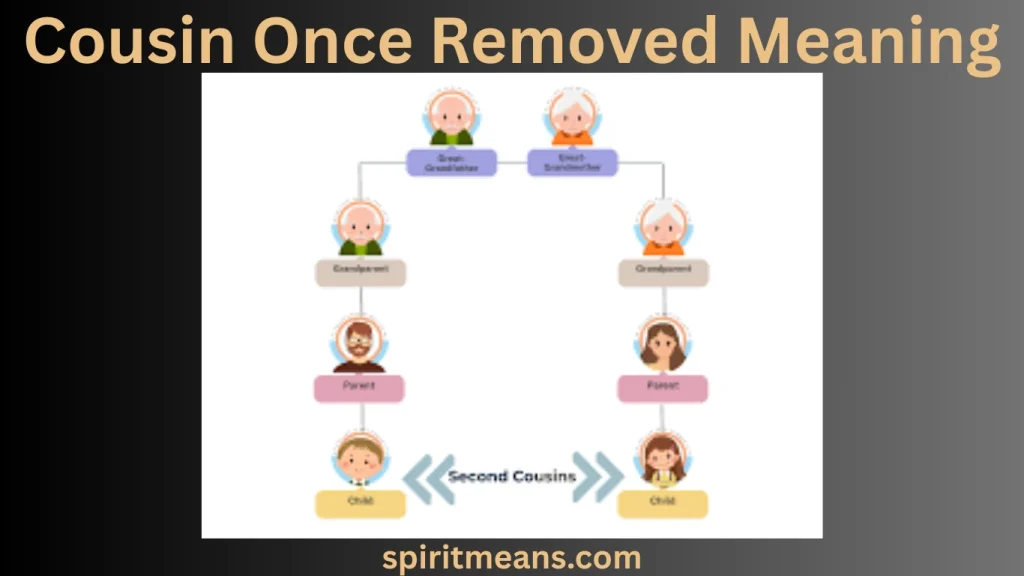
A cousin once removed is a cousin from a different generation. If two people are first cousins, they share the same grandparents. When the family line shifts one generation up or down, the relationship becomes “once removed.” This means there is a one-generation difference between the two relatives.
For example, your mother’s cousin is your cousin once removed. At the same time, your cousin’s child is also your cousin once removed. The key is the generation gap that separates you.
| Relationship | How They Are Related to You | Term Used |
| Your parent’s cousin | Shares great-grandparents with you | First cousin once removed |
| Your cousin’s child | Shares grandparents with your cousin | First cousin once removed |
| Your grandparent’s cousin | Shares great-great-grandparents with you | First cousin twice removed |
This table makes it easier to visualize where “removed” relationships come from.
Why Do Families Use the Word Removed?
The word “removed” in family terms does not mean taken away. Instead, it shows the difference in generations. Families are layered across time, and some cousins live closer to your age while others belong to your parents’ or grandparents’ age groups.
Using “removed” creates accuracy. It explains the exact place of a person in your extended family tree. Without it, families would confuse different cousins and find it hard to trace ancestry.
Generational Differences in Cousins
The main point of confusion with cousin relationships is generation. If someone belongs to your own generation, they are usually just a cousin, like first cousin or second cousin. If the person belongs to your parent’s or child’s generation, they are called once removed or even twice removed depending on the distance.
For example, if you are 20 years old and your mother’s cousin is 40, they are one generation above you. That is why they are your cousin once removed. Similarly, if your cousin has a child who is 5 years old, you are a generation above them, so that child is also your cousin once removed.
Cousin Once Removed Meaning in Daily Life
The idea of once removed might sound like a distant relationship, but in real life it is very common. Many people grow up around their parent’s cousins or play with their cousin’s children at family events. These relatives still feel close, even if they are technically a generation apart.
Knowing these terms helps in creating accurate family histories. It also helps when studying genealogy because clear definitions of relationships prevent confusion about who belongs where in a family tree.
Examples to Understand the Term Better
Let us look at two easy examples:
- Your mom’s cousin, named John, is one generation older than you. He is not your uncle but your first cousin once removed.
- Your cousin Sarah has a daughter named Emily. That daughter is not your niece but your first cousin once removed.
In both cases, the generation difference creates the “removed” relationship. These examples show how the phrase works in everyday families.
Difference Between Cousin and Cousin Once Removed
Many people confuse the simple word cousin with the longer phrase. The difference lies in the generation. Cousins who belong to the same generation are just cousins. If the cousin is from a different generation, the word removed is added.
| Type | Same Generation? | Example |
| Cousin | Yes | You and your aunt’s child |
| Cousin once removed | No | You and your cousin’s child OR you and your parent’s cousin |
This shows clearly how one small word changes the family position.
Why Is It Important to Know the Meaning?
Understanding family connections matters for many reasons. First, it helps you recognize relationships during family events. Second, it helps when creating or reading a family tree. Third, it builds knowledge of ancestry, which is valuable for culture, history, and even medical records.
Family terms are part of cultural identity. They explain bonds that go beyond parents, siblings, and grandparents. Knowing them helps in feeling closer to extended relatives.
Cousin Once Removed in Genealogy
Genealogists, or people who study family history, use precise terms. Without terms like once removed, family charts would be confusing. A person researching their ancestors might discover a relative who fits the once removed description. Without this clarity, that person could mistakenly be labeled as a direct cousin or even an uncle or aunt.
This makes the term vital for tracing accurate lineage. The cousin once removed meaning is not just casual but also professional in genealogy.
Modern Use of the Term
In modern families, many people do not use technical terms. They might simply say cousin without worrying about “once removed.” However, in legal matters like inheritance or family property, the exact relationship matters. Courts, lawyers, and family historians often require clear terms.
For example, in some inheritance cases, whether a person is a cousin or cousin once removed can affect their legal rights. This shows the term has value beyond casual conversations.
Comparison With Twice Removed and Beyond
The concept can continue further. Twice removed means a two-generation difference. For example, your grandparent’s cousin is your cousin twice removed. If the gap grows larger, the term “removed” keeps adding numbers.
| Term | Generational Difference |
| Once removed | One generation |
| Twice removed | Two generations |
| Thrice removed | Three generations |
Though most families only use once or twice removed, the system technically works for as many generations as needed.
Cultural Differences in the Use of Cousin Terms
Different cultures use cousin terms in unique ways. Some cultures call all cousins brothers and sisters. Others do not distinguish between once removed and regular cousins. In English-speaking cultures, the technical terms are more common.
This difference shows how families understand relationships based on traditions. Still, for genealogy and legal records, the cousin once removed meaning remains important across cultures.
Frequently Asked Questions
Is my cousin’s child my niece or nephew?
No, they are not your niece or nephew. They are your first cousin once removed.
What does once removed mean in simple words?
It means there is a one-generation difference between you and that cousin.
Is my parent’s cousin my uncle or aunt?
No, they are not your uncle or aunt. They are your cousin once removed.
Can someone be twice removed?
Yes, if the generation gap is two, like your grandparent’s cousin.
Why does genealogy use the term removed?
It makes family trees more accurate and avoids confusion with other relatives.
Conclusion
The phrase might sound complicated at first, but the cousin once removed meaning is very simple. It shows a cousin relationship where the relatives are one generation apart. That difference can be either above or below your generation.
Understanding this relationship helps with family trees, legal matters, and cultural knowledge. While families may not always use the exact term in casual talk, it plays a big role in clarity. Whether it is your parent’s cousin or your cousin’s child, the relationship remains valuable and close.
By knowing these terms, families connect better across generations. The once removed cousin is not distant but simply placed in a unique position within the family tree. This simple knowledge makes family bonds stronger and history clearer.
Also, Read Physiatrist Meaning and Why It Matters for Recovery