
A Beginner’s Guide To Buying Your First Home: Key Steps And Considerations

Table of Contents
- Why Homeownership Matters
- Assessing Your Financial Readiness
- The Importance of Pre-Approval
- Key Steps in the Home-Buying Process
- Finding The Right Home
- Making An Offer And Negotiations
- Navigating Home Inspections And Appraisals
- Closing And Moving In
- Additional Resources
Why Homeownership Matters
Buying your first home is a significant life milestone with tangible and intangible benefits. Besides being a sound investment for many Americans, homeownership can result in greater financial stability, increased net worth, and the freedom to personalize your living space. For many, finding the right property from selections like San Diego CA homes for sale becomes both a dream and a strategic move for long-term security. Beyond the pride of ownership, a home creates a sense of belonging and the opportunity to build community roots.
However, homeownership also comes with significant responsibilities. You’ll be in charge of upkeep, property taxes, and mortgage financial obligations. It’s vital to balance these responsibilities with the exciting rewards. According to the U.S. Census Bureau, the homeownership rate in the United States hovers around 65%, demonstrating its enduring importance for families nationwide.
Assessing Your Financial Readiness
Before taking your first steps in the housing market, assess your financial health. A strong economic foundation will put you in a better position to qualify for favorable mortgage terms and confidently navigate the process. Start by examining your savings for a down payment—most lenders require between 3% to 20% of a home’s price upfront. Also, plan for additional closing costs and moving expenses.
Your credit score will play a pivotal role. Lenders use this figure to gauge your ability to repay and to set your interest rate. Typically, higher credit scores translate to better loan offers. Review your credit report, pay down debts, and avoid opening new credit lines before buying. Your debt-to-income (DTI) ratio—how much of your income goes towards debt repayments—also profoundly influences lender decisions. For more on why your credit score matters, visit the Consumer Financial Protection Bureau’s resource.
The Importance of Pre-Approval
Mortgage pre-approval is an essential step before house-hunting in earnest. During this process, a lender evaluates your financial background and provides a letter stating how much they’re willing to lend. This clarifies your budget limits and signals to sellers that you’re a serious and qualified buyer, which can give you an edge in competitive markets.
To get pre-approved, assemble recent pay stubs, tax returns, bank statements, and proof of other assets. Working with a lender early can highlight potential issues with your application and help you correct them in advance.
Key Steps in the Home-Buying Process
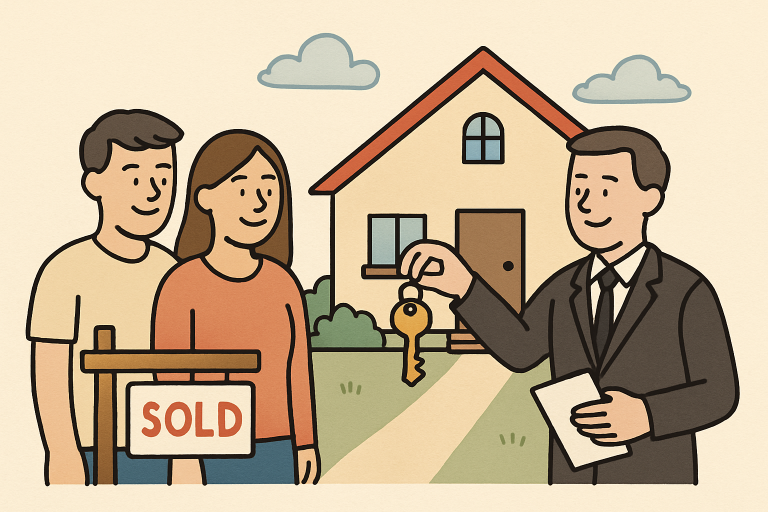
Buying a home typically unfolds in several defined stages. First, determine your budget and ideal location. Then, start house-hunting and attend open houses. Once you find a suitable property, make an offer, negotiate terms, and sign a purchase agreement. Home inspections and appraisals follow, ensuring the property meets your expectations and the sales price matches the home’s value.
Organization is key. Track deadlines, required paperwork, and communications with all parties. Using checklists or digital project management tools can help ensure that no important steps are overlooked. For a step-by-step walk-through, consult guides from trusted sites like NerdWallet.
Finding The Right Home
When searching for your first property, clarify your must-haves versus nice-to-haves. Consider factors such as commute times, neighborhood amenities, school districts, and future growth potential. Also, consider the type of home—single-family, condo, or townhouse—and the associated pros and cons.
Partnering with a qualified real estate agent offers expertise that simplifies the process, especially in fast-paced or unfamiliar markets. Agents provide insights on pricing, help with negotiations, and guide you through paperwork, making your journey smoother and less stressful.
Making An Offer And Negotiations
Once you’ve found a home, making your offer can feel daunting. Work with your agent to determine a fair price based on comparable sales and market trends. Including pre-approval documentation with your offer shows sellers that you’re a credible buyer.
Be prepared for negotiation—sellers might counter with different terms, including price, closing timelines, or contingencies. Remain flexible but firm in your priorities. Don’t be afraid to walk away if terms don’t align with your goals or budget.
Navigating Home Inspections And Appraisals
The inspection and appraisal phases protect your interests. A home inspection uncovers potential safety hazards and needed repairs, while an appraisal determines the property’s fair market value for your lender. Everyday checklist items for first-time buyers include checking the roof’s condition, electrical systems, plumbing, HVAC, and foundation integrity. If issues arise, you can request repairs or negotiate the price.
Most lenders require an impartial appraisal to ensure the home’s value matches or exceeds the agreed-upon purchase price. This step helps you avoid overpaying and provides peace of mind before finalizing the deal.
Closing And Moving In
Closing day requires you to review and sign documents, transfer funds, and officially own your new home. This process typically involves your lender, title company, and possibly your real estate attorney. Bring all requested identification, proof of insurance, and any additional paperwork. Review your closing disclosure for accuracy and ensure all agreed-upon repairs have been made.
Moving in can be an adventure once the deal’s closed and you receive your keys. Hiring movers, packing early, and updating utilities and address records in advance can streamline your transition. For valuable moving tips and a detailed checklist, visit the New York Times First-Time Home Buyer’s Guide.
The home-buying journey demands research, planning, and patience. To make your first home purchase successful, equip yourself with knowledge, engage with professionals, and approach every phase with confidence.
also read: Traveling the Globe Through Food: Culinary Adventures for the Curious Explorer